Most companies aren’t breached because of a single dramatic hack—they’re compromised through small, preventable IT gaps that quietly go unnoticed.
Why It Matters
When IT risks go unchecked, the business impact is real: unexpected downtime, lost revenue, compliance exposure, stalled growth, and leadership distracted from running the company. In our work with SMBs, we consistently see issues that could be addressed quickly turn into major disruptions simply because no one was looking closely enough.
Below are the five biggest IT risks we consistently see in SMBs—and the fastest, practical fixes we recommend.
The 5 Biggest Risks (and Fast Fixes)
1. No Multi‑Factor Authentication (MFA) on Critical Systems

The risk: Email, Microsoft 365, VPNs, and remote access tools protected by only a password.
Why it matters: One stolen password is all it takes for ransomware or wire fraud.
Fast fix:
- Enable MFA on email, cloud apps, VPNs, and admin accounts
- Lock down 6 critical security settings in Microsoft 365
- Takes under 30 minutes per user—and stops the majority of common attacks
2. Backups That Haven’t Been Tested
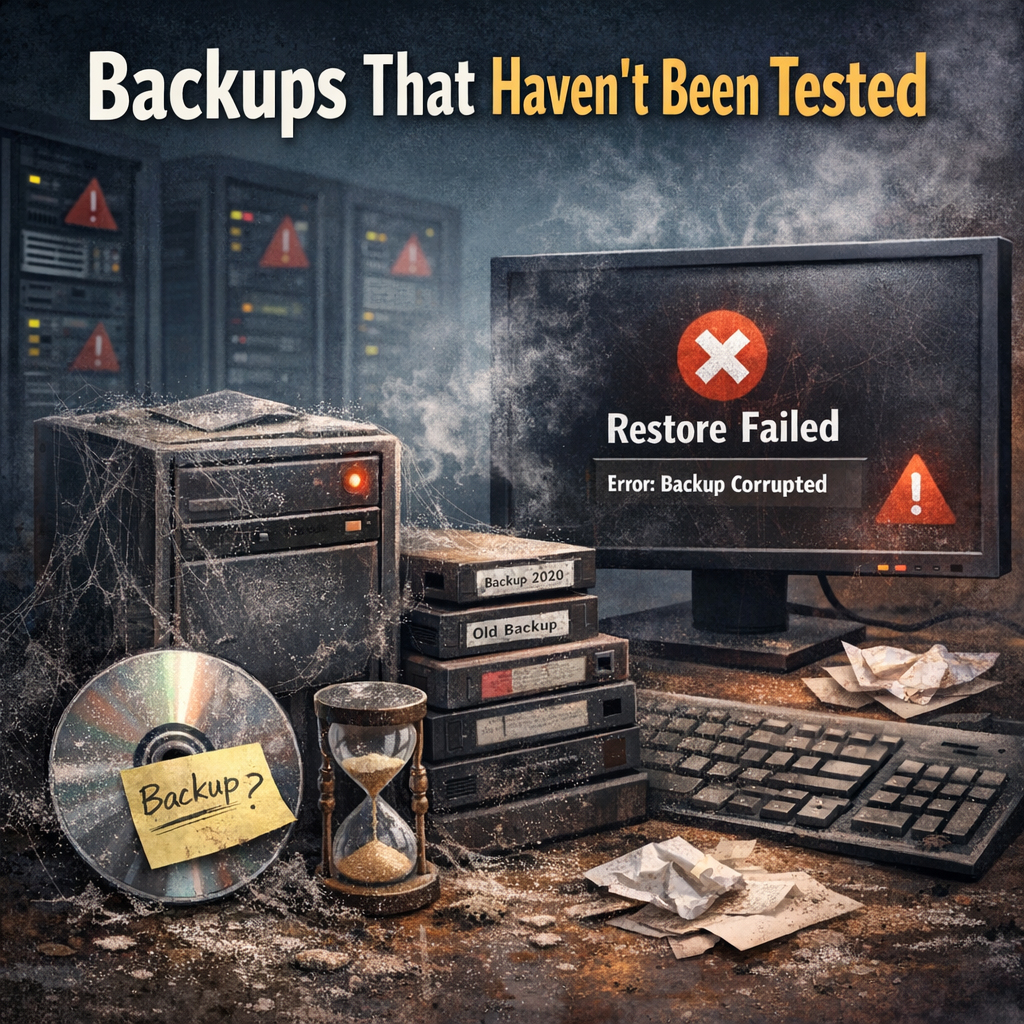
The risk: “We have backups” — but no one has verified they actually restore.
Why it matters: During an outage or ransomware event, untested backups often fail when they’re needed most.
Fast fix:
- Run a quarterly test restore (files + systems)
- Ensure backups are off-site and immutable
- Document a 10‑point backup checklist so it’s repeatable
3. Over‑Privileged Users (Too Much Access)

The risk: Employees have admin rights “just in case.”
Why it matters: Malware runs at the same permission level as the user—admin rights turn small issues into major incidents.
Fast fix:
- Remove local admin access for standard users
- Create role‑based access instead of one‑off exceptions
- Review permissions in under 60 minutes for most SMBs
4. Aging Hardware Quietly Increasing Risk

The risk: Firewalls, servers, and PCs past support but still “working.”
Why it matters: Unsupported hardware doesn’t receive security updates—making it a soft target.
Fast fix:
- Identify devices past end‑of‑life
- Replace or virtualize only what’s critical (not everything at once)
- Build a 3‑year lifecycle plan to avoid surprise spending
5. No Documented Incident or Recovery Plan
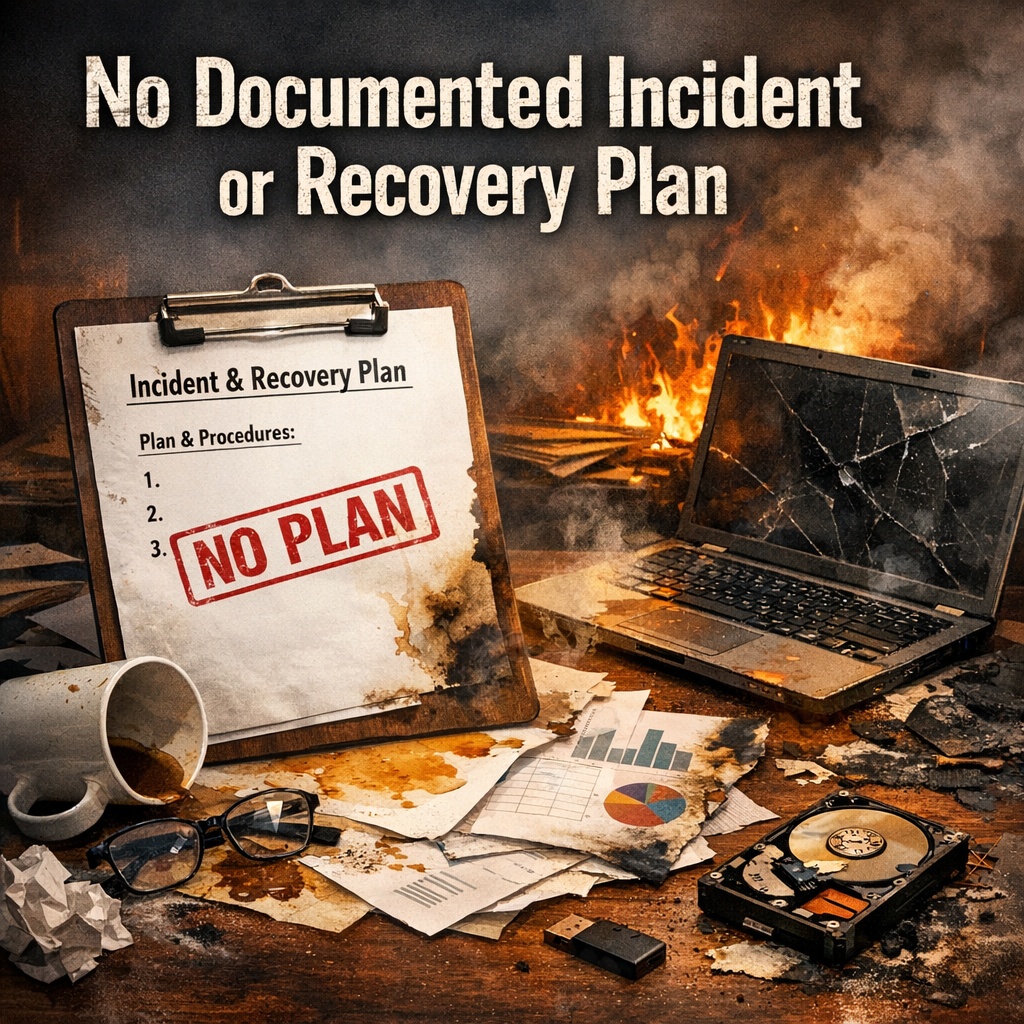
The risk: Everyone assumes IT will “figure it out” during an incident.
Why it matters: Confusion and delays often cost more than the incident itself.
Fast fix:
- Create a 1‑page incident response plan
- Define who makes decisions, who communicates, and what shuts down first
- Review it annually—simple, fast, and effective
A Simple Next Step
If you want confidence that none of these risks are quietly sitting in your environment, a short IT audit can surface them fast.
If you’d like us to check your security, contact us for an IT audit.